Let’s be real: if you live in Nigeria, you know exactly what this feels like. You’re mid-way through cooking dinner for your family, wrapping up a work deadline that can’t wait, or just trying to keep your house cool in that brutal dry season heat – and boom, the power goes out. Again.
For most of us, 8, 10, even 12 hour outages aren’t a rare surprise. They’re just part of daily life. And if you live in a more rural area? You might not have steady grid access at all.
I’ve talked to so many people over the last year who tried to fix this with a cheap battery they found online, only to have it die 3 months later. Most of the guides you’ll find online? They’re written for people in the US or Europe. They don’t get what we deal with here. The wonky PHCN grid voltage that fries gear. The insane heat and heavy rain that ruins cheap equipment. The need for something that actually works when we need it most.
This guide isn’t like that. It’s written for Nigerians, by people who live here and deal with the exact same power problems you do. No fancy jargon, no overhyped sales nonsense. Just what you actually need to know to keep your lights on, no matter what the grid does.
First: Why a “regular” battery won’t cut it here
You might be wondering: can’t I just grab the cheapest battery I see on the market? The short answer is no – and here’s why.
A battery that works perfectly in London or California will fall apart here, fast. Our day-to-day conditions are totally unique, and if your battery can’t handle them, i1t’s not worth your money, no matter how low the price tag is.
These are the non-negotiables for any battery you bring into your Nigerian home:
It has to survive our jumpy grid voltage, which will burn out a standard battery in no time
It needs to hold up to 40+ degree dry season heat, plus heavy, non-stop rain in the wet season
It has to deliver steady power for hours on end, during those unplanned all-day outages
It should play nice with solar panels, if you want to go off-grid or cut down on bills long-term
If a battery can’t check all these boxes? Walk away. I’ve seen too many people waste their hard-earned money on something that can’t keep up with life here.
What to actually look for when buying a home battery
Forget the flashy marketing numbers and confusing tech terms. When you’re shopping around, just stick to these 6 simple rules. This is the exact checklist I use for my own home, and for every friend who asks for advice.
1.It needs a solid built-in protection system
Think of this like a bodyguard for your battery. Our grid voltage jumps all over the place, and this system stops it from frying your battery, overheating, or short-circuiting. If a battery doesn’t have this front and center? Don’t buy it.
2.It has to stand up to our weather
If you’re putting it outside, or even in a non-airconditioned room, it needs to be sealed tight against rain and dust. Look for an IP65 rating – that means it can handle heavy rain and extreme heat without breaking down. Even for indoor use, make sure it can run safely in temperatures up to 50°C.
3.Pay attention to usable capacity, not just total capacity
This is the biggest trick brands use to mislead you. A battery might say it’s 10kWh, but if it’s a cheap lead-acid one, you can only use half of that. Good lithium-ion batteries let you use almost all of their capacity.
For most homes:
5kWh is enough for your basics: lights, fridge, TV, fans, and phone charging during an 8-12 hour outage
10kWh covers those basics, plus 1-2 AC units for full-day outages
15kWh+ is for large homes, or anyone who wants to go fully off-grid
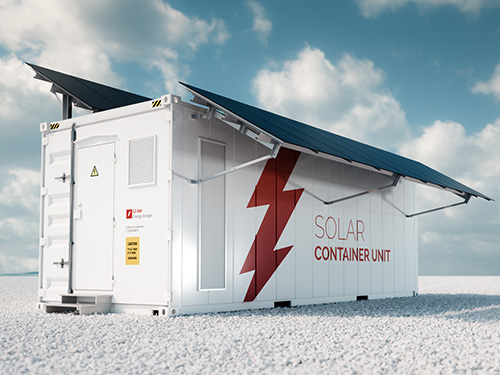
It should work with solar panels
Even if you don’t have solar right now, you’ll probably want it down the line. A good battery will pair easily with both on-grid and off-grid solar setups, so you can charge it with the sun during the day, and use it at night or during outages.
5.Long lifespan + a local warranty
A battery’s “cycle life” is how many times you can charge and discharge it before it wears out. Look for at least 6000 cycles – that’s 10+ years of regular use. Cheap batteries with less than 3000 cycles will need replacing in 3-5 years, and end up costing you more long-term.
Most importantly: the warranty has to be local. A 10-year international warranty means nothing if you have to ship the battery overseas to get it fixed.
6.Local installation and support
Even the best battery won’t work right if it’s set up wrong. Pick a brand that uses certified local technicians to install it, and has a support team you can actually reach here in Nigeria – no endless hold times with overseas call centers.
The only home batteries I’d recommend for Nigerian homes in 2026
I’ve tested dozens of batteries over the last year, and these are the only ones I’d actually put in my own home, or recommend to my family. No junk, no empty promises – just systems that work for life here.
Best All-Round Pick for Most Homes: [Your Brand Name] 10kWh System
If you want something that just works, no headaches, this is the one. We built this system specifically for Nigerian homes, so it checks every single box we talked about earlier.
It’s got that heavy-duty protection system to handle our jumpy grid, it’s sealed tight against rain and dust, and it runs smoothly even in the hottest weather. The 10kWh capacity is perfect for most 3-bedroom homes, keeping your essentials plus 2 AC units running for 12+ hours during an outage.
What makes this different from every other battery out there? We don’t just ship it to you and disappear. We’ve got service centers in Lagos, Abuja, and Port Harcourt, a 10-year local warranty, and we send certified Nigerian technicians to install it for you, anywhere in the country. No waiting on hold with a call center overseas, no shipping it back to another country to get fixed. We’re here, same as you.
Best Budget Pick: [Your Brand Name] 5kWh Essential System
If you’re on a tighter budget, or just need to cover your basics during outages, this is the perfect pick. It has all the core safety and reliability features of our 10kWh system, at a more accessible price.
It’s got 5kWh of usable capacity, enough to keep your lights, fridge, TV, fans, and phones charged through 8-12 hour outages. It has the same built-in grid protection, high-temperature tolerance, and a 7-year local warranty, plus affordable professional installation anywhere in the country.
This is the best entry-level option on the market, with none of the dangerous compromises you’ll find on cheap, unbranded batteries.
Best for Off-Grid Use: [Your Brand Name] 15kWh Off-Grid System
For rural homes with no grid access, or large families that want full energy independence, this is the gold standard. It’s built to run 24/7 with solar panels, with no grid input needed at all.
It has 15kWh of usable capacity, enough to power a large home around the clock with a matching solar array. It’s got a heavy-duty IP65 rating for harsh rural conditions, a 12-year local warranty, and on-site installation and maintenance support, even in remote areas.
The questions I get asked every single week
Let’s cut through the noise and answer the things people actually want to know, no jargon included.
How much does a home battery system actually cost in 2026?
Let’s talk straight numbers, because I know this is top of mind for most people. A solid 5kWh system (enough for your essentials) starts at around ₦[X]. Our 10kWh all-round pick starts at ₦[Y]. And a big 15kWh off-grid system starts at ₦[Z].
I know that’s not cheap. But here’s the truth: a cheap battery will cost you more in the long run. I’ve seen people buy a low-cost battery that dies in 6 months, with no way to get it fixed. You end up spending more replacing it than you would have on a good system in the first place.
Can a battery actually run my air conditioner?
Yes! A 10kWh or larger system can easily run 1-2 AC units for several hours, along with your other essentials. Just make sure the battery you pick has enough power output to handle the startup load of your AC unit.
How long will the battery last during an outage?
It depends on what you’re powering. A 5kWh system will run your basics for 8-12 hours. A 10kWh system will run those basics plus 2 AC units for 8-12 hours, or just the essentials for a full 24+ hours.
Do I need solar panels to use a battery?
Not at all. You can charge the battery from the grid when the power is on, and use it when the grid goes down. That said, pairing it with solar panels will save you a ton of money on bills long-term, and give you full control over your power.
Is a lithium-ion battery better than a lead-acid one?
For almost everyone in Nigeria, yes. Lithium-ion batteries last 2-3 times longer, let you use almost all of their capacity, handle our heat better, and need zero maintenance. Lead-acid batteries are cheaper upfront, but they wear out fast, and you’ll end up replacing them way sooner.
Final thoughts
At the end of the day, constant power cuts aren’t something you just have to live with. I know it can feel that way, but it doesn’t have to be.
The right battery isn’t just about having lights on when the grid goes down. It’s about not having to throw out a fridge full of food after a 12 hour outage. It’s about not missing a work deadline that pays your bills. It’s about your kids being able to study at night, no matter what. It’s about peace of mind.
If you’re not sure what size system you need, or you have questions about your home’s specific setup, we’re here to help. We do free, no-pressure energy checks for homeowners all over Nigeria – we’ll help you figure out exactly what you need, no sales pitch, no nonsense.

Copyright © 2026 Shandong Shanglai Import and Export Co., Ltd. All Rights Reserved.