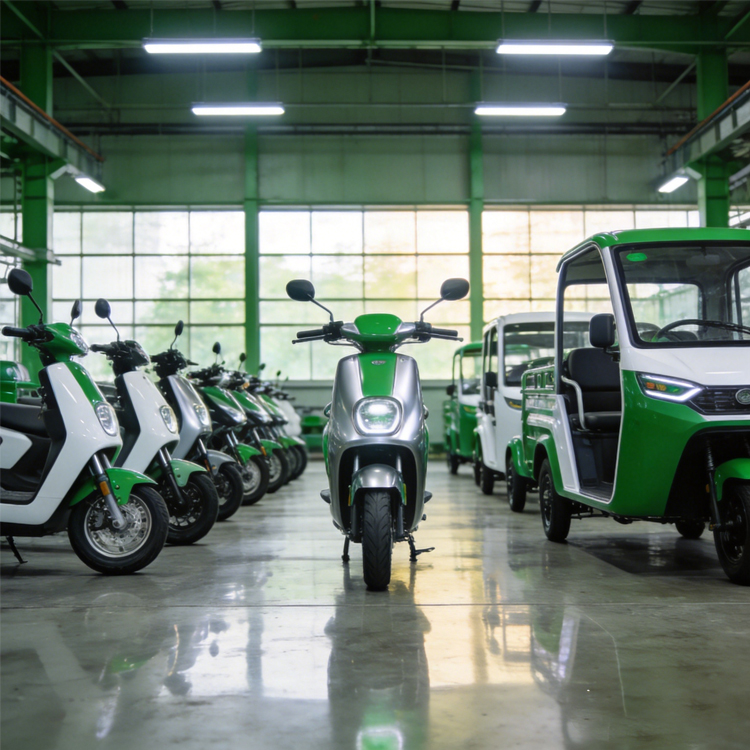
If you run a cargo trike, a food cart, or do last-mile delivery, you already know the drill. Your battery dies halfway through the shift, you plug it in, and then you wait. And wait. Six to eight hours later, you're back on the road — having missed the busy part of the day.
That's the reality a lot of small operators are tired of. And it's why 72V LiFePO4 swappable battery systems are starting to pop up everywhere from Bangkok backstreets to Nairobi neighborhoods to Latin American towns where the "last mile" is really a narrow alley and a set of stairs.
Trike voltage ranges from 48V all the way up to 96V, but 72V hits a sweet spot:
Lead-acid used to be the default. Not anymore. Lithium iron phosphate (LiFePO4) has three big advantages that matter when your income depends on the vehicle running:
Cycle life. A decent cell handles 2000+ cycles. That's five to six years at one charge per day. Lead-acid gives you maybe two years before capacity drops off a cliff.
Weight. Half the weight of lead-acid at the same capacity. A lighter trike means longer range and more payload — and payload is money.
Stable output. Voltage stays steady under heavy load. No sluggish acceleration, no fading power halfway up a slope.
One honest note: LiFePO4 hates the cold. Below 10°C, charging without a heated pad will wreck the cells over time. If you operate in a place with real winters, make sure the BMS includes low-temp protection and a heating function. Don't cheap out on this.
Swapping isn't new. But on a trike, it changes the game.
Time. Charging takes hours. Swapping takes minutes — pop the pack out, slide a fresh one in, done. That's two or three extra trips per day.
Battery health. A proper swap station charges under controlled temperature with balancing. The pack lives longer than it would sitting on someone's porch getting trickle-charged by a beat-up charger.
Lower upfront cost. Battery-as-a-service means you don't drop a huge lump sum upfront. Pay monthly, or per swap, or per kilometer. Much easier on the cash flow.
Seasonal flexibility. Busy month? Swap more. Slow month? Swap less. You're not sitting on a stack of dead batteries you already paid for.
In this business, the only thing that matters is uptime. A trike parked next to a charger is a trike that isn't earning.
72V LiFePO4 already solves "go far" and "last long." Add swapping, and you fix the one part of the day that used to be pure wasted time.
If you're thinking about converting a fleet — or just your own rig — drop a comment with your model and typical load. Happy to help you figure out whether the numbers actually work.

Copyright © 2026 Shandong Shanglai Import and Export Co., Ltd. All Rights Reserved.