If you’d told someone in 2005 that the future of the car industry would hinge on what’s basically a souped-up laptop battery, they’d have laughed you out of the room. But here we are. The internal combustion engine, the undisputed king for over a hundred years, is finally meeting its match — and it doesn’t roar, it hums.
I’ve been following this space for a while now, and what strikes me most is how fast the ground has shifted. Not long ago, “electric car” conjured images of glorified golf carts with the range of a hamster wheel. Today, a kid in a showroom doesn’t ask if an EV can make it to school and back — they ask how fast it charges and whether the infotainment system runs TikTok.
At the center of all this is the power battery. And honestly, it’s a hell of a lot more interesting than it sounds.
How We Got Here
The story doesn’t start with Tesla, though Elon Musk’s crew definitely gets credit for dragging EVs out of the eco-nerd ghetto and into the mainstream. The real pivot point was the lithium-ion battery — the same tech that’s been in your pocket since the early ’90s. Once engineers figured out how to scale those cells from “powers a phone” to “powers a two-ton sedan,” everything changed.
Before that? Lead-acid. Nickel-metal hydride. Clunky, heavy stuff that belonged in a forklift, not a family car. Lithium-ion was the leap — lighter, denser, and capable of actually holding a charge you could use.
The Chemistry Wars
Here’s where it gets messy. Walk into any EV discussion forum and you’ll find people arguing about battery chemistry like it’s a religious debate. And they’re not entirely wrong to care.
LFP — lithium iron phosphate, if you want to sound smart at a party — is the workhorse. It’s cheap, it’s stable, and it lasts forever. Chinese manufacturers, especially BYD, have bet big on it. The trade-off? It’s a bit bulkier for the same range. But honestly, most people don’t need 400 miles of range every day. They need a car that won’t catch fire in a Phoenix parking lot in July. LFP delivers on that.
Then there’s NMC and NCA — the nickel-heavy stuff. This is what gets you the big numbers on the spec sheet. 350, 400, even 500 miles of range. Great if you’re road-tripping across the Nullarbor. Less great when you realize you’re relying on cobalt mined by hand in the Congo and a battery management system that needs to be smarter than a chess grandmaster to keep things from overheating.
And then there’s the wildcard: solid-state. Everyone’s chasing it. Toyota, CATL, startups with names like QuantumScape that sound like they belong in a sci-fi novel. The promise is simple — replace the flammable liquid electrolyte with a solid one, get more energy, better safety, faster charging. The reality? It’s been “five years away” for about fifteen years now. But this time, the money behind it is real, and the prototypes are starting to look like actual products.
The Stuff Nobody Talks About
Energy density gets all the press. “Our new battery packs 300 Wh/kg!” Cool. But here’s what actually matters to a person living with one of these things:
Will it still have 80% of its capacity after eight years? Degradation is the silent killer. Early EVs lost range like a sieve. Modern ones? They’re getting better, thanks to smarter software and better thermal management. But it’s still the question every buyer asks and no salesperson wants to answer honestly.
Can I charge it without planning my life around it? This is the real bottleneck. Not the battery itself, but the infrastructure and the charging curve. A battery that can take 350 kW is useless if the charger tops out at 50. And even with the good stuff, you’re looking at 20–30 minutes for a meaningful top-up. It’s not “fill it and forget it” yet. Not quite.
What happens when it dies? Recycling is the dirty secret of the EV boom. Millions of battery packs will hit end-of-life in the next decade, and we’re nowhere near ready. The good news is that the materials inside — lithium, nickel, cobalt — are valuable. The bad news is that pulling them out economically, at scale, is still more aspiration than reality. Companies are working on it. They have to.
The Big Picture
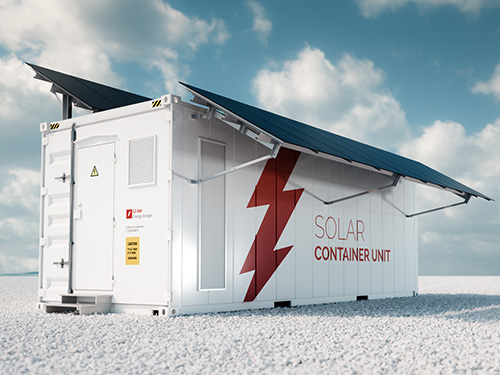
Step back and the power battery isn’t just about cars anymore. It’s about the grid. It’s about energy storage for solar and wind when the sun isn’t shining and the wind isn’t blowing. Retired EV batteries, with maybe 70–80% of their original capacity left, are perfect for that. The line between “car component” and “energy infrastructure” is blurring fast.
And the supply chain? That’s a whole other can of worms. Lithium isn’t rare, but getting it out of the ground and into a cell is concentrated in a handful of countries. China owns the midstream — the refining, the processing, the actual making of battery materials — and everyone else is scrambling to catch up. The U.S. threw a pile of money at it with the Inflation Reduction Act. Europe’s doing the same. Whether it’s enough, fast enough, is anyone’s guess.
Where This Is All Going
I’ll be honest: I don’t know if solid-state will win. Or sodium-ion, which is suddenly looking interesting for the cheap-and-cheerful segment. Or some chemistry we haven’t even named yet. What I do know is that the trajectory is clear. Batteries are getting better, cheaper, and more central to everything we do.
Ten years from now, the idea of a car without a battery will seem as quaint as a horse trough on a city street. The only question is which chemistry — and which company — ends up powering that world.
And if you’re shopping for a car today? Don’t get too hung up on the spec sheet. The battery under your floor is probably good enough. The one coming in three years will be a lot better. That’s the nature of this business — it moves fast, and it’s not slowing down.

Copyright © 2026 Shandong Shanglai Import and Export Co., Ltd. All Rights Reserved.